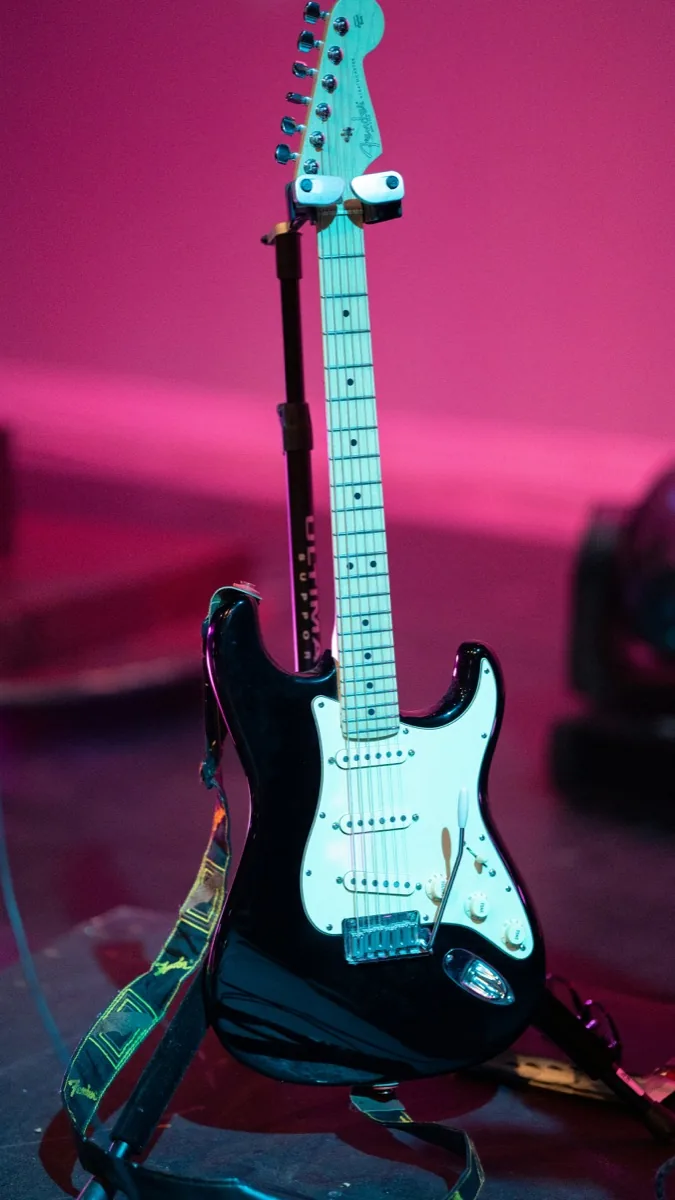
If you've been anywhere near the guitar community online lately, you've probably seen this story breaking. Fender has reportedly sent cease-and-desist letters to boutique guitar builders — including at least one U.S. company — demanding they stop making Stratocaster-style guitars. The letters reportedly go further than that, in some cases demanding the recall and destruction of stock already sold into the EU.
This is a big story that's still developing. Here's what we actually know, what's still unclear, and where I stand on it.
Key Takeaways
- In March 2026, Germany's Regional Court of Düsseldorf ruled the Stratocaster body qualifies as a "copyrighted work of applied art," giving Fender new legal tools beyond trademark.
- California-based LsL Instruments confirmed receipt of a Fender cease-and-desist; reports suggest at least six builders received similar letters.
- The ruling applies primarily to EU sales. The U.S. market's 2009 situation — where the Strat body is widely treated as public domain — still stands.
- Fender has absorbed Jackson (2002), Charvel, and potentially G&L's IP (2025), fitting a clear pattern of market consolidation.
What happened
In March 2026, Germany's Regional Court of Düsseldorf handed Fender a legal victory in a case against a China-based seller. The court ruled that the Stratocaster body shape qualifies as a "copyrighted work of applied art" — not just a trademark or a functional design, but a creative work deserving copyright-level protection.
That's a significant legal shift. Fender previously tried and failed to trademark the Stratocaster shape in the U.S. — that case was settled in 2009, and the Strat body has been widely treated as public domain in the American market ever since. Copyright is a broader and more powerful claim, and the German ruling has given Fender's legal team — the firm Bird & Bird — a new tool to work with.
Armed with that ruling, Fender has reportedly sent cease-and-desist letters to multiple builders of "S-style" guitars. Guitar World identified California-based LsL Instruments as the first builder publicly confirming receipt of one. Reports suggest at least half a dozen companies may have received similar notices. The letters became public largely through YouTubers Phillip McKnight and Tone Nerd, who shared copies online.
What the letters reportedly demand
- Stop manufacturing, selling, and marketing Stratocaster-style guitars
- Recall and destroy stock sold into the EU
- Disclose sales data
- Pay damages and legal fees
What this actually covers, and what it doesn't
This is the part most of the outrage online is glossing over, so it's worth being precise.
The German ruling applies most directly to guitars sold or distributed into Germany and the EU. That's where the court found the design protection applies. For the U.S. market, the reporting consistently indicates that the 2009 situation still holds — the Strat body is widely described as public domain domestically.
So a U.S. builder making S-style guitars for U.S. customers faces a different legal risk than one selling into Europe. The practical problem is that cease-and-desist letters create fear and legal costs regardless of their ultimate enforceability — and most boutique builders don't have the resources to find out the hard way which side is right.
"We make less than 500 guitars a year, while Fender makes 500,000." — LsL Instruments
That's the real asymmetry here. Fender's legal budget dwarfs what most boutique builders earn in a year. Litigation itself becomes the punishment, regardless of who's legally in the right.
What's still unclear
This is an escalating legal campaign, not a settled worldwide ban. The original ruling was a default judgment — the Chinese defendant never appeared to contest it, which means the legal arguments haven't been properly tested against substantive counterarguments. That matters. A well-funded builder who chooses to fight could produce a very different outcome.
What we don't yet know: exactly how many builders have received letters, whether Fender will actually file lawsuits outside the EU, and how courts in other jurisdictions would view the underlying claim. MusicRadar and Gear Gods have been tracking this closely — worth following both as this develops.

Why this isn't a surprise
If you've been watching Fender's moves over the past two decades, this aggressive posture fits a clear pattern of market consolidation.
In 2002, Fender acquired Jackson Guitars — and with it, Charvel, the California brand that helped define the shred era of the 1980s. That's a clean, well-documented acquisition. Fender owns Jackson. Fender owns Charvel. Two significant competitors absorbed under one roof.
Then there's G&L. This one is more complicated — and more personal to the history of the Stratocaster itself. G&L was founded in 1980 by Leo Fender — yes, the same Leo Fender — along with George Fullerton and Dale Hyatt, after Leo's original Fender company had been sold to CBS. G&L was essentially Leo's final chapter: his refinements on the classic designs he'd spent his life building, including innovations like the Magnetic Field Design pickups and the Dual-Fulcrum vibrato. It was the guitar company he built after Fender, arguably building on what Fender had started.
In 2025, G&L was dissolved. Reports from Guitar World and former employees suggest Fender may have acquired G&L's intellectual property and trademarks — including, notably, the "Leo Fender" name. The full details are still murky and this isn't a clean acquisition the way Charvel was. But if Fender now controls the Leo Fender name and G&L's IP, the symbolism is hard to ignore: the company Leo built after leaving Fender may now be under Fender's roof.
A company that owns Jackson, Charvel, and potentially G&L's IP — and is now using a German court ruling to restrict independent S-style builders — is not just protecting its brand. It's systematically narrowing the competitive landscape.

My take as a guitar educator
I'll be direct: this bothers me, and I think it should bother anyone who cares about the guitar market staying open and competitive. I have two specific concerns.

First, this effectively creates a monopoly on S-style guitars — and that hits beginners hardest. Guitars are not getting cheaper. When I bought my first Squier starter pack with an amp, it ran me roughly $249.99. That was over 25 years ago. A comparable beginner pack today runs about $279.99 — you can find one here. That's not a massive jump in isolation, but it's an increase, and it's happening in a market where wages haven't kept pace with the cost of living. Every dollar of choice that gets removed from the beginner market matters.
When I recommend a guitar to someone just starting out, the single most important thing I tell them is this: buy the guitar that makes you want to pick it up every day. That's not a Fender for everyone. Some people connect with the feel of an Ibanez. Some are drawn to a PRS SE. If budget allows, a Suhr. The S-style body shape is everywhere because it works for a huge range of players — and right now, a huge range of builders make it accessible at a huge range of price points.
If Fender successfully consolidates control over that shape, the beginner who walks into a store or opens a browser looking for something that inspires them has fewer options. Fewer options at fewer price points. That's not good for the instrument, and it's not good for the people I'm trying to help learn it.
Second, the irony here is real. Leo Fender wasn't working in a vacuum. He built on ideas that existed before him, refined them brilliantly, and made them accessible. That's exactly what boutique builders do today. A company that built its legacy on accessible design using legal force to restrict others from doing the same thing deserves to be called out for it.
I also want to be fair: Fender has a legitimate interest in protecting its brand from cheap counterfeits. Nobody benefits from low-quality knockoffs marketed as the real thing. But there's a significant difference between a counterfeit and a boutique builder making 300 hand-built guitars a year for players who specifically want something that isn't a Fender.
And I'll go further than that. In my experience, there are builders out there who have outclassed Fender — time and time again — on both value and quality. That's not a slight, it's just honest. When you're buying a production guitar at scale, there are tradeoffs. Boutique builders don't make those tradeoffs the same way. The fit, the finish, the attention to how the neck feels in your hand — these things matter to players who have developed preferences over years of owning instruments. Fender doesn't have a monopoly on quality any more than it should have a monopoly on a body shape.
The people most at risk from a chilling effect here aren't professionals with endorsement deals. They're working musicians, hobbyists, and adult beginners who benefit from a market where independent builders can thrive alongside the big names.
A guitar lover's perspective

I've been buying and selling guitars for over ten years. I've owned more than I can easily count, and one of the things I've loved most about that journey is the variety — the way each builder brings something different to the same basic idea.
One guitar that stands out is the PRS John Mayer Silver Sky. I picked one up as a demo when it first released. It's an S-style guitar — same general shape we're talking about in this entire article — but the moment I plugged it in, I felt a connection I hadn't felt with any other Fender I'd owned. The neck profile, the pickups, the way it responded. PRS took the same foundational concept and refined it into something that spoke to me differently. That guitar would not exist in the same form if one company controlled the shape.
These days I'm more particular about what I pick up. I gravitate toward refined specs — the details that separate a good guitar from a great one. I've had the privilege of working with some remarkable builders: a local shop in Maryland run by friends, and Novo Guitars out of Tennessee, whose attention to craft is something I genuinely respect. These aren't factory instruments. They're the product of people who have spent years thinking deeply about what makes a guitar feel right.
"Is there really much difference between a 1975 Stratocaster and one released today?"
And here's the honest question I keep coming back to: if Fender is claiming the Stratocaster body as creative expression worth protecting under copyright, what have they actually done with it? I love Fender — if someone asked me to align with a single brand, they'd be my first answer. But let's be real. The Stratocaster is one of the most iconic designs in the history of music, and Fender has largely left it alone for decades. The recipe hasn't changed much. Is there genuinely a meaningful difference between a 1975 Stratocaster and one rolling off the line today?
Meanwhile, builders like PRS, Novo, Suhr, and countless smaller shops have been the ones pushing what the S-style can be — in tone, feel, hardware, and craftsmanship. The innovation hasn't been coming from Fender. It's been coming from the builders they're now going after.
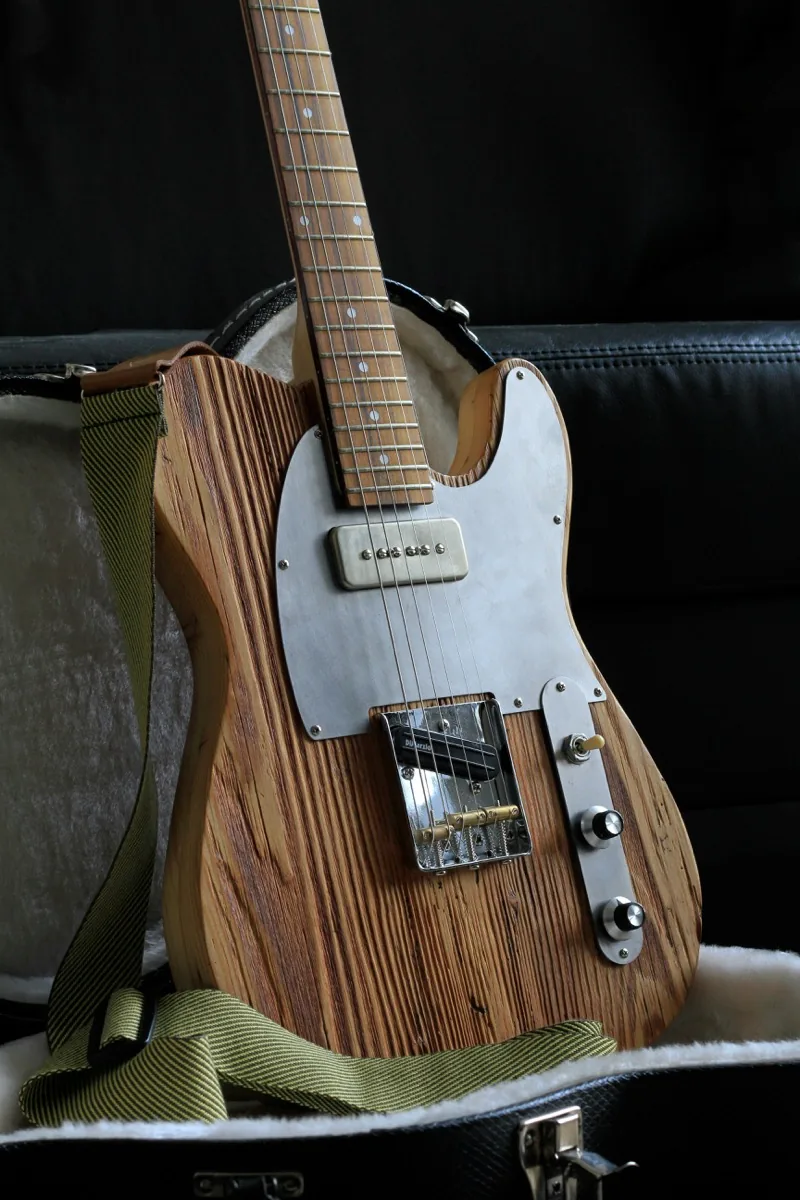
I also can't help wondering where this ends. The Stratocaster is the target today. But Fender also owns the Telecaster design. If this legal strategy succeeds, is the T-style next? What happens to the builders — and the players — who have built their entire identity around a shape that has belonged to everyone for over half a century?
I don't have clean answers. But I think these are the right questions to be asking, and I think anyone who loves guitars — regardless of what they play — should be paying attention right now.
What to watch
If any of the targeted builders decide to fight back legally, this could look very different by year's end. The default judgment that started this has never been tested against a real defense. I'd watch for whether any of the larger boutique builders — ones with the resources to litigate — decide to push back.
In the meantime, if you're in the market for a guitar and you care about this issue, supporting independent builders directly is the most concrete thing you can do. If you're ready to buy and want a concrete breakdown, I've put together a guide to the best Fender Stratocaster alternatives at every price point — including a few picks that sidestep the S-style world entirely.
I'll keep following this as it develops. Feel free to share your take in the comments or find me on YouTube.

Sources
- Guitar World — Fender cease-and-desist to LsL Instruments
- Guitar World — Fender's German ruling on the Stratocaster body
- Guitar World — Former G&L employee speaks out
- MusicRadar — Fender issues cease-and-desist over S-style guitars
- Gear Gods — Fender's Stratocaster crackdown begins
- Guitar.com — What Fender's demands mean for the industry
- Bird & Bird — Press release on the Düsseldorf ruling
- Investopedia — Companies owned by Fender (Charvel/Jackson acquisition)
- Wikipedia — Charvel history
- Wikipedia — G&L Musical Instruments
This post reflects my personal opinion as a guitar educator and is based on publicly available reporting as of May 2026. I am not a lawyer and nothing here constitutes legal advice. This situation is still developing — details may have changed since publication. Some links in this post are affiliate links.
Learn guitar your way
Free resources for adult beginners
Chord charts, song packs, and a 2-week practice plan — no credit card, no overwhelm.
Download Free →Frequently Asked Questions
Does Fender's legal crackdown apply to guitars sold in the United States?
Not directly. The March 2026 ruling came from Germany's Regional Court of Düsseldorf and applies primarily to EU sales. The U.S. situation dates to a 2009 settlement in which the Stratocaster body was left widely treated as public domain domestically. U.S. builders selling only in the U.S. face different — and currently weaker — legal risk, though cease-and-desist letters create legal costs regardless.
Which guitar builders have received cease-and-desist letters from Fender?
California-based LsL Instruments was the first builder to publicly confirm receipt of a Fender cease-and-desist, as reported by Guitar World in May 2026. YouTubers Phillip McKnight and Tone Nerd shared copies of the letters publicly. Reports suggest at least six companies received similar notices, though most have not confirmed publicly.
Can boutique builders legally fight back against Fender's claims?
Yes, and the original ruling has a real weakness: it was a default judgment. The defendant never appeared to contest it, so Fender's arguments have never been tested against a real defense. A well-funded builder who chooses to litigate could produce a very different outcome. The practical barrier is cost — most boutique shops making 300 to 500 guitars a year cannot afford a prolonged legal fight against a company Fender's size.
Will Fender go after Telecaster-style guitars next?
Unknown, but it's worth watching. Fender owns the Telecaster design, and if the Stratocaster campaign succeeds, there is no obvious legal reason the same strategy couldn't extend to T-style builders. The final image in this post shows exactly that concern. This is one of the biggest open questions in the guitar industry heading into late 2026.
What should I buy if I want an S-style guitar that isn't a Fender?
The market remains competitive for now. PRS (the Silver Sky and the more affordable SE Silver Sky), Suhr, and dozens of boutique shops continue to make excellent S-style guitars at a range of price points. Supporting independent builders directly is the most concrete thing you can do while this situation develops. I've also put together a full breakdown of the best S-style alternatives at every price point if you're ready to shop. If you're just starting out and figuring out what to buy first, this guide covers the beginner guitar question in detail.
Stay in the Loop
Enjoy the read? Get more like this.
Join the list for guitar tips, gear picks, and practice advice — plus the free beginner starter pack when you sign up.
You're in — check your inbox for your welcome note and free resources.
You're already on the list — glad you're here.
Something went wrong. Please try again.