
When someone tells me they're 50 years old and want to learn guitar, my response is immediate: "Let's rock n roll!" And they almost always light up. Not because the road ahead is easy — but because genuine enthusiasm changes the energy in the room. The question isn't whether a 50-year-old can learn guitar. They can. The question is what's actually going to get in the way, and it probably isn't what you think.
It isn't age. It isn't even finger coordination. The biggest obstacle I've seen hold back guitar players at 50 is something that took years to build and rarely gets talked about in beginner guides: ego.
Key Takeaways
- Learning guitar at 50 is entirely possible — age is not the primary barrier. Consistency and commitment are.
- The hardest adjustment at 50 is starting at zero. Experts in their fields often struggle most with being complete beginners.
- Physical challenges like finger stiffness are real but rarely stop anyone from making music and enjoying the guitar.
- You never master the guitar — you just keep picking up new skills. That mindset removes the 10,000-hour anxiety entirely.
- The only way in is all the way in. Fifteen focused minutes a day, and you will not be disappointed.
| Common Concern at 50 | What the Research Actually Shows |
|---|---|
| My brain is too old to learn | A 2024 BBC study of 1,100+ adults found instrument playing delivers the strongest brain-health benefits of any music activity |
| It takes 10,000 hours | Ericsson (the original researcher) said the 10,000-hour rule was a misreading — deliberate practice matters far more than raw hours |
| My ego won't let me be a beginner | AARP found 55% of adults 45+ are already actively learning new things — and 97% of those learners intend to continue |
| Arthritis will stop me | Lower action, lighter strings, and open chord shapes make guitar accessible for most players with hand stiffness |
| I don't have enough time | 15 focused minutes a day produces faster results than occasional long sessions — consistency beats duration |
Is It Actually Too Late to Learn Guitar at 50?
In 2024, a BBC-reported study of more than 1,100 adults over 40 found that playing an instrument was linked with the strongest brain-health benefits of any music activity — with benefits including better memory, attention, and thinking skills (BBC, 2024). AARP summarized further research showing that adults in their 60s and beyond showed improvements in working memory and verbal fluency after as little as 10 weeks of music training (AARP). The adult brain stays adaptable. The question at 50 isn't can you learn — it's whether you'll show up long enough for learning to happen.
Guitar teachers and researchers who study adult learning consistently say the same thing: age is not the barrier most people assume it is (Acoustic Guitar). Adults in their 50s, 60s, and beyond learn guitar successfully every day. What matters far more than age is whether you can commit to showing up — consistently, for short focused sessions — and whether you can tolerate being a beginner.
That second part is harder than most people expect. Read our complete guide to learning guitar as an adult for the full picture on what the learning arc actually looks like. The short version: most adults can play songs they feel good about within 3 to 6 months of daily practice. The timeline at 50 is no different from 30 or 40.
What Actually Makes Learning Guitar Hard at 50?
An AARP survey found that 55% of Americans aged 45 and older are actively learning new things — and 97% of those current learners say they intend to continue (AARP). The willingness is clearly there. What stops people isn't usually ability or even time. Research on adult learning increasingly points to something else: identity. Adults who have spent decades building expertise in their careers find it genuinely threatening to start at zero again — and that psychological discomfort, not physical limitation, is what most often ends the journey before it begins (EPALE).
I spend a lot of time around retirees and people in their 50s. They almost all say the same thing: "always keep learning." It's wisdom they've earned. But in practice, walking into a new skill at this stage of life is genuinely difficult — and the reason isn't physical. It's psychological.
Think about where most people are at 50. They've spent decades building expertise. They're senior in their careers, respected in their communities, accomplished in their fields. They're the person others come to for answers. Then they pick up a guitar and they're at zero. No status, no expertise, no shortcut from decades of experience. They have to earn every single note.
That's a hard pill to swallow. And a lot of people can't swallow it. Not because they aren't capable of learning — but because ego and pride get in the way before the fingers even touch the strings. The retirees who say "always keep learning" often mean it in theory. In practice, being a genuine beginner at 50 requires a kind of humility that expertise makes harder, not easier, to find.

Instead of being the collection of successful skills you've spent a lifetime building, you start at zero. That's the real challenge at 50 — and it has nothing to do with your hands.
What About the 10,000-Hour Myth?
The 10,000-hour rule was drawn from a study of elite violinists where the best group had accumulated roughly that many hours by age 20 — but Ericsson, the researcher behind the original work, later criticized the rule because it turned an average into a hard threshold and ignored individual variation (BBC). His actual finding was about deliberate practice — focused, feedback-driven sessions targeting specific weaknesses — not raw hours. For an adult learning guitar at 50, the better question is "how can I get 20 high-quality focused minutes today?" not "how many years until I reach a mythical threshold?"
Almost everyone at 50 has heard about the 10,000-hour rule — the idea that mastery requires that many hours of practice. For guitar, that number creates a wall before the first chord is even played. Ten thousand hours feels impossible. So why start?
Here's what I tell every student: you never master any instrument. You just keep picking up new skills. The 10,000 hours concept frames learning as a destination, but guitar doesn't work that way. Every player at every level — beginner, intermediate, professional — is still learning. The goal isn't mastery. The goal is progress. And progress starts in the first 15 minutes.

Does Arthritis or Finger Stiffness Stop You?
Arthritis doesn't automatically rule out guitar — the goal is to make the instrument work for your hands, not force your hands to work harder. Lower action, lighter strings, and a shorter scale length reduce the fretting pressure required to play. Electric guitars with light strings typically require less pressure than acoustics. A proper setup by a guitar technician — something that costs $40–60 — can make a bigger difference than switching instruments entirely (Eastwood Guitars; Premier Guitar). Open chords, two-finger shapes, and thumb strumming are valid alternatives to full barre chords for players managing stiffness.
Physical concerns at 50 are real — finger stiffness, arthritis, reduced grip strength. These aren't imaginary. Anyone who tells you physical changes don't happen with age isn't being honest with you (TunElectric). But the question isn't whether they exist. It's whether they stop you from making music.
The lead guitarist in one of my bands is dealing with a neurological condition that causes him to lose feeling in his hands and fingers. He still plays. And he plays very well. His physical limitation is far more significant than anything most 50-year-olds will face, and he shows up every rehearsal. That's what I think about when someone tells me they're worried about stiff fingers.
Here's the principle I come back to every time: guitar is designed for you to have fun first and foremost. How you achieve that fun can be done at your own pace, with whatever your hands are capable of doing today. One of the most inspiring guitarists I know personally is my cousin, who has an electric guitar and — no matter what I show him — is always perfectly content playing the A chord shape. Just that one shape. He plays entire songs with it. I've come to think that's not a limitation. That's a great exercise for guitar players at every level. Lean into what you can do.

What Should a 50-Year-Old Actually Do Today?
Not someday. Today. Here's exactly what I tell anyone at 50 who's sitting on the fence:

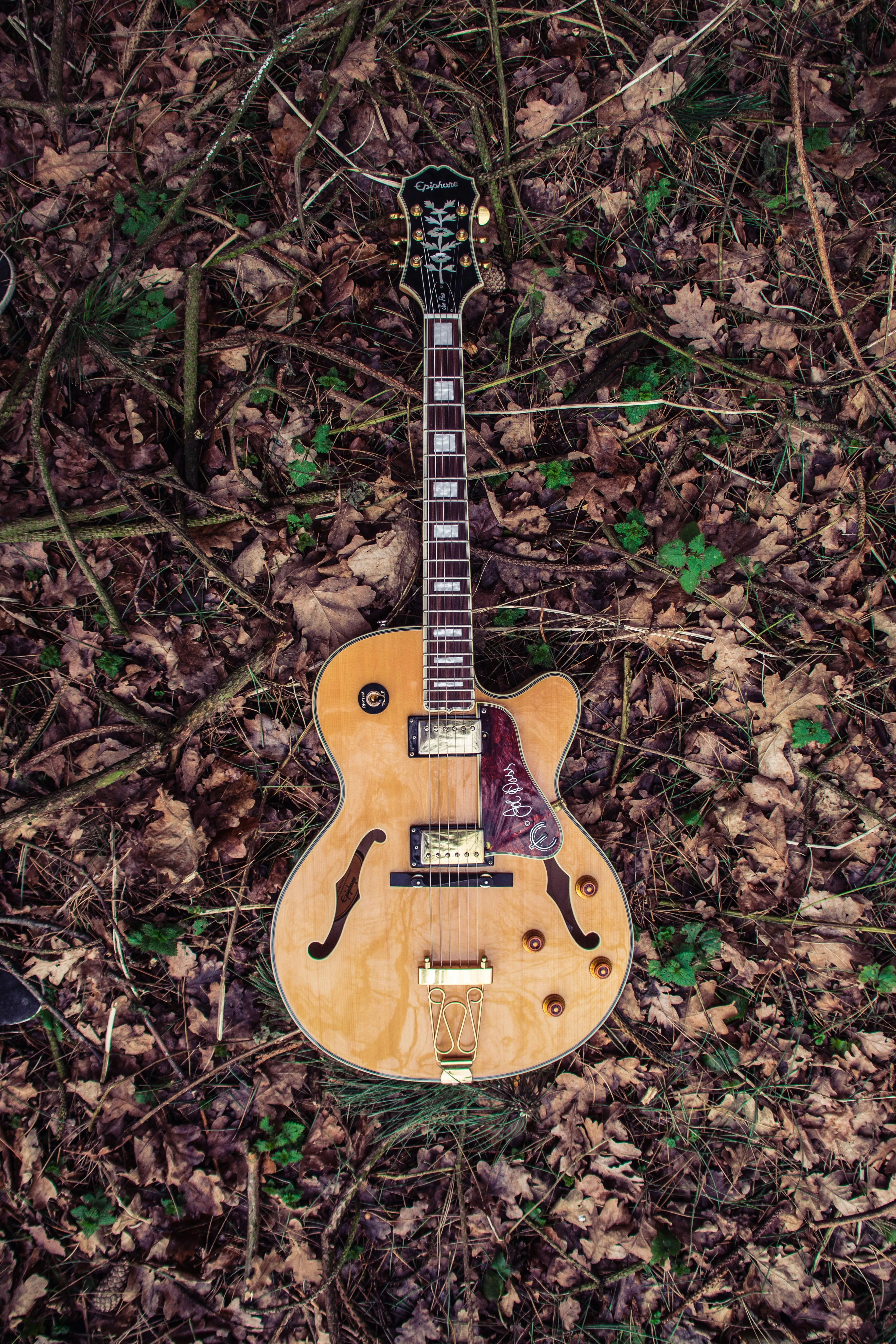
Go to a music store. Ask the person behind the counter to hand you a quality acoustic guitar for the price range you're in the market for. Grab a stool and just hold it. Wrap your fingers around the neck. Touch the strings. See if your strumming arm feels comfortable hanging over the body.
Then imagine being able to make music with that guitar one day.
If you can imagine it, even faintly, that's enough. Buy it. Take it home. Commit to 15 focused minutes a day. Use our free 30-day practice plan to know exactly what to do in each session — and if a full calendar has you wondering where those minutes will come from, how to find time to practice guitar with a full-time job walks through exactly how to carve them out. And trust this: if you are all the way in and dedicated to just 15 minutes a day, you will not be disappointed.
But if you're struggling to imagine it, that's okay too. Thank the store employee, put the guitar back, and move on. No big deal. Life goes on. The only way to learn guitar is to be fully committed — half in, half out leads nowhere. The store test is a good way to find out which you are before you spend a dollar.
Want to see what those first chords actually look like in practice? This lesson from Mark has helped nearly 30,000 people take their first real step on guitar:
Free Download
Get the 30-Day Guitar Practice Plan
Day-by-day sessions, the targeted practice formula, and a chord reference for your first month. Built around 15 minutes a day. Free.
Get the Free Plan →Frequently Asked Questions
Can I learn guitar at 50?
Yes. Age is not the primary barrier to learning guitar at 50. The biggest challenge most people at this age face is the discomfort of being a complete beginner after decades of professional expertise. Physical factors like finger stiffness are real but rarely insurmountable. Commit to 15 focused minutes daily and you will make real progress (Acoustic Guitar).
Is 50 too old to start learning guitar?
No. Guitar teachers regularly work with students in their 50s, 60s, and 70s. The instrument is designed for enjoyment first, and that's achievable at any age. Some of the most inspiring players started late in life — including players managing serious physical conditions who still perform well. See also: Is It Too Late to Learn Guitar After 40?
What are the biggest challenges of learning guitar at 50?
Two things: ego and physical adjustment. People at 50 are often experts in their careers and find starting at zero genuinely uncomfortable — that's the ego trap. Physical challenges like finger stiffness are real but manageable. The solution to both is leaning into what you can do rather than measuring yourself against what's difficult.
How long does it take to learn guitar at 50?
With 15 focused minutes of daily practice, most adult beginners can play songs they feel proud of within 3 to 6 months. The timeline at 50 is no different from 30 or 40 — the variable is consistency, not age. For the full breakdown, see How Long Does It Take to Learn Guitar as an Adult?
What guitar should a 50-year-old beginner start on?
Go to a music store, ask for a quality acoustic in your price range, sit with it, and hold it. See how it feels in your hands and how your strumming arm rests on the body. If you can imagine yourself making music on it — buy it and start. Start with acoustic: it builds finger strength faster and transfers to electric when you're ready. Find options at zZounds or used on Reverb.
Sources
- BBC — "Playing musical instrument linked to brain health benefits in adults over 40," 2024, retrieved 2026-06-02
- AARP — "Brain Health Benefits of Learning a Musical Instrument," retrieved 2026-06-02
- AARP — Lifelong Learning in Older Adults (55% actively learning), retrieved 2026-06-02
- EPALE — "Barriers to Learning: Understanding Learner Challenges in Adult Education," retrieved 2026-06-02
- BBC Future — "Is Malcolm Gladwell's 10,000 Hours Rule a Myth?", retrieved 2026-06-02
- Eastwood Guitars — "A Tenor Guitar Solution for Guitarists with Arthritic Hands," retrieved 2026-06-02
- Premier Guitar — "Acoustic Guitar for Arthritic Hands," retrieved 2026-06-02
- Acoustic Guitar — "Am I Too Old to Learn Guitar?", retrieved 2026-06-02
- TunElectric — "7 Essential Insights for Learning Guitar at 50 and Over," retrieved 2026-06-02
- TheGuitarLesson.com — "Too Old to Learn Guitar at 30? 40? 50? 60?", retrieved 2026-06-02
- Personal teaching experience — Mark Claiborne, MTWL Media, 2026