Update — June 15, 2026
This story has moved forward again. Read our latest update for new details on the Düsseldorf ruling and how the guitar-building community is reacting to Fender's clarification.
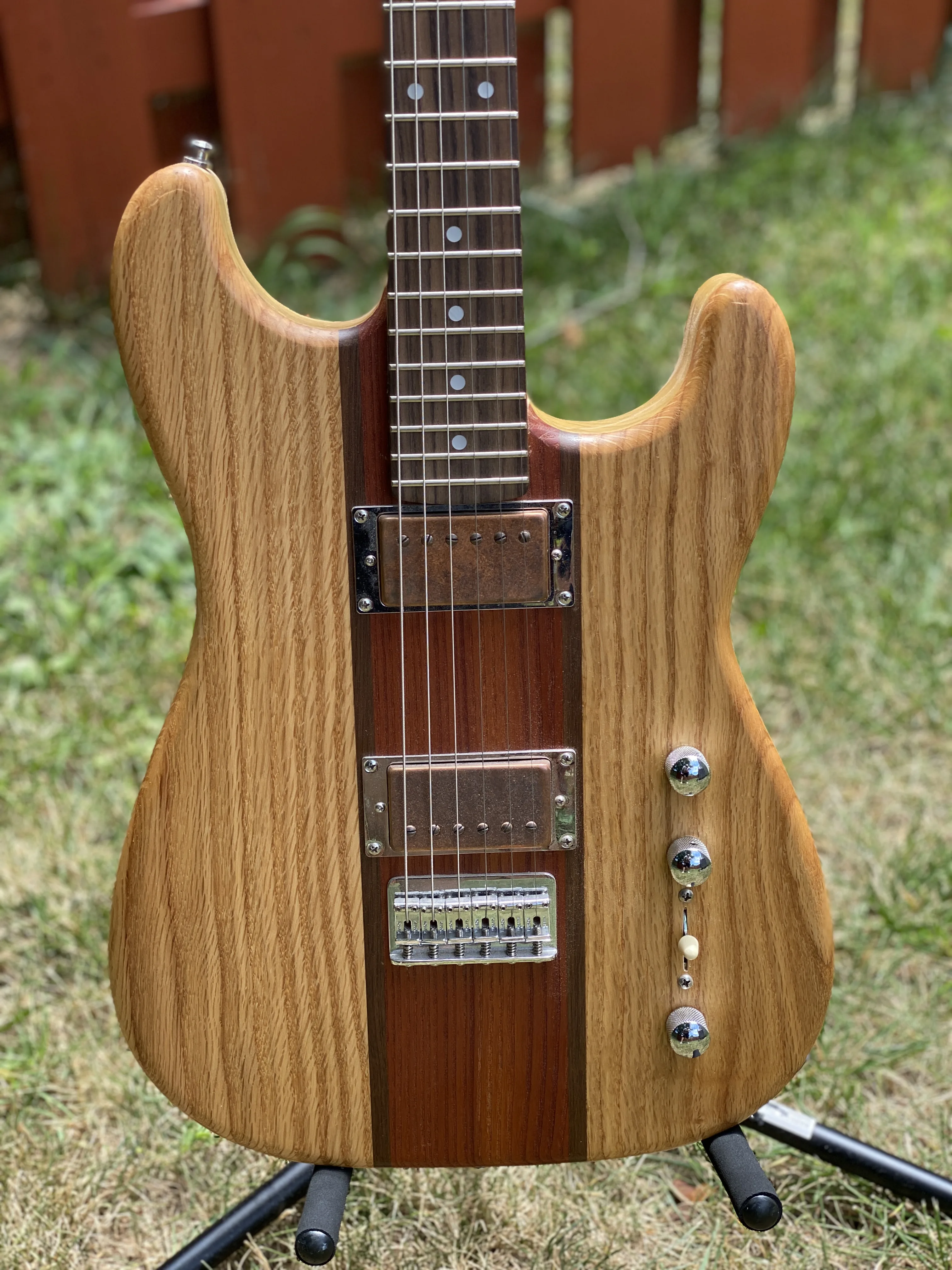
If you've been following guitar news this spring, you've probably seen the headlines: Fender is sending cease-and-desist letters to S-style guitar builders. The story has moved fast, and a lot of the coverage has been either alarming or vague. This is our follow-up to our original coverage of Fender's lawsuit against boutique builders — here's what's changed, what we know now, and what you need to think about if you own, build, or are planning to buy an S-style guitar.
The short version: Fender won a copyright ruling in Germany in March 2026, and in May started sending letters to boutique builders in the US telling them to stop making certain S-style guitars. As of late May, the situation looks less like an industry wipeout and more like an active negotiation phase with legal teeth. The biggest immediate risk is in Europe, not the US. But there's more to it than that.
Key Takeaways
- In March 2026, a German court in Düsseldorf recognized the Stratocaster body as protected under EU copyright law (Bird & Bird, 2026).
- In May 2026, Fender sent cease-and-desist letters to US boutique builder LsL Instruments and reportedly other builders (Guitar World, 2026).
- Fender says it is targeting direct Strat copies, not all S-style or two-horn body shapes.
- The strongest legal enforcement is in Europe. The US situation is still developing.
- Builders can continue if designs are "sufficiently different" from the Stratocaster, per Fender's May 2026 public statement.
What Started This? The March 2026 German Court Ruling
In March 2026, Fender's law firm Bird & Bird secured a ruling from a court in Düsseldorf, Germany, recognizing the Stratocaster body design as a protected work of applied art under German and EU copyright law. That framing matters. It's not a trademark claim. It's a copyright claim, and copyright law in Europe treats original creative works differently from how US trademark law handles trade dress.
What makes this ruling significant is the theory behind it. Fender is arguing that the Stratocaster body shape itself, the contoured double-cutaway design Leo Fender created in the early 1950s, qualifies as an artistic work, not just a product identifier. If that argument holds up on appeal and in other EU courts, it could give Fender much broader grounds than a typical trade dress case. It's a different legal angle than what guitar companies have historically fought over, and it's the reason the industry is paying close attention.
Bird & Bird said the ruling gives Fender enforceable rights against guitars using the Stratocaster body shape that are manufactured, sold, or distributed into Germany and potentially the wider EU market (Bird & Bird, March 2026). The March ruling is the legal foundation for everything that followed in May.
Who Got a Letter? The LsL Instruments Cease-and-Desist
On May 17, 2026, Guitar World reported that Fender had sent a cease-and-desist letter to LsL Instruments, a well-regarded US boutique builder. The letter told LsL to stop manufacturing, selling, and marketing allegedly infringing S-style guitars. Reports also indicated other US builders may have received similar letters around the same time (Guitar World, May 17, 2026).
LsL Instruments is not a budget knockoff operation. They're a respected California shop building high-end custom and production guitars. That's the part of this story that surprised a lot of players: Fender isn't just going after cheap imports. They're going after established, quality-focused US boutique builders who make guitars inspired by the Stratocaster's body shape.
I've watched students agonize over this kind of thing. Someone is shopping for their first serious electric guitar, they find a boutique S-style that's genuinely great, and then they see a headline like this and wonder if they're about to buy something from a builder who might not exist next year. That anxiety is understandable. But the reality of what Fender has actually said, as of late May 2026, is more nuanced than the headlines suggest.

The Full Timeline: From Düsseldorf to June 2026
Fender's enforcement campaign moved from a March 9, 2026 German court victory to active cease-and-desist letters within 69 days — one of the faster legal-to-enforcement timelines in recent guitar industry history (Bird & Bird, March 2026; Guitar World, May 2026). Here's every reported development in order.
- March 9, 2026 Fender won a court ruling in Düsseldorf, Germany, recognizing the Stratocaster body design as protected under copyright law as a work of applied art. Law firm Bird & Bird announced the ruling publicly.
- March 2026 Fender said the ruling gave it enforceable rights against guitars using the Stratocaster body shape manufactured, sold, or distributed into Germany and potentially the wider EU market, per Guitar World reporting.
- May 17, 2026 Reports confirmed Fender had sent a cease-and-desist letter to US boutique builder LsL Instruments, telling them to stop making certain S-style guitars. Reports also indicated other US builders may have received letters.
- May 17–20, 2026 Industry and online discussion focused on whether Fender was moving from the German win to a broader enforcement campaign. Concerns centered on recalls, inventory destruction, and pressure on smaller builders.
- May 26, 2026 Fender publicly clarified its position, saying it was targeting direct Stratocaster copies rather than all guitars with two-horn or S-style shapes, and framing the campaign as protecting creativity and innovation (Guitar World, May 26, 2026).
- Late May 2026 Fender's public stance: builders can continue if designs are changed enough to avoid confusion with the Stratocaster. Settlement talks remain open. Inventory destruction is described as a last-resort remedy, not a preferred outcome.
- May 29, 2026 (current) The dispute is in an active negotiation and enforcement phase. Some recipients have already entered settlement discussions. A response deadline was reportedly extended to June 8, 2026. The strongest enforcement position remains in the EU.
"Builders can continue if designs are sufficiently different from the Stratocaster. Inventory destruction is a last resort, not a preferred outcome." — Fender, May 2026
Why the EU Angle Matters More Than the US Headlines
Fender sold an estimated 450,000 electric guitars globally in 2023, with annual net sales under $900 million — large, but not a giant (Market Reports World, 2023). Roughly 35–50% of that volume flows through beginner-oriented Squier and entry-level Fender models. The boutique S-style market represents a fraction of a fraction of that. Yet Fender's strongest legal enforcement position is not in the US market where most of that volume flows — it's in Europe, based specifically on the March 2026 Düsseldorf ruling. The US cease-and-desist letters rely on trade dress law rather than copyright, and that's a harder case to win (Guitar World, 2026).
For a builder or buyer, the practical risk map looks like this: guitars that are manufactured in Europe, sold into the EU, or distributed through EU channels face the most immediate legal exposure. A boutique US builder making guitars for the US domestic market is in a different legal position than a manufacturer shipping product into Germany. That's not legal advice, and the situation is still developing. But the distinction between where the Düsseldorf ruling applies and where it doesn't is the most important thing to understand about this story right now.
What Fender Has Said Publicly
- Targeting direct Stratocaster clones, not all S-style or two-horn body guitars.
- Builders whose designs are "sufficiently different" can continue to make and sell guitars.
- Inventory destruction is a last-resort legal remedy, not its preferred outcome.
- Settlement talks with some affected builders are already underway.
- The response deadline for affected builders was reportedly extended to June 8, 2026.
What Does "Sufficiently Different" Actually Mean?
As of May 26, 2026, Fender declined to publish a specific design checklist, telling Guitar World only that guitars "sufficiently different" from the Stratocaster fall outside its campaign (Guitar World, May 26, 2026). The line is being drawn case by case through settlement negotiations, not public announcements. That's frustrating, but it's also how these situations typically work. A company issues legal pressure, negotiates with individual builders, and the line between infringing and non-infringing gets drawn through settlements and any additional court rulings rather than a public announcement.

What Fender has said is that its target is guitars that could be mistaken for a Stratocaster because they use the same body shape. Guitars with a different body profile, different horn shape, different contours, or enough other visual distinction fall outside what it says it's going after. For a player looking at the alternatives market, that means there's a meaningful difference between a guitar that is essentially a Strat with a different headstock and one that genuinely re-interprets the double-cutaway form.
If you're shopping for S-style alternatives right now, see our breakdown of the best S-style guitars that bring something distinct to the design. Understanding which builders are pushing the shape forward versus copying it closely is a useful lens for this moment in the market.
Free Guitar Resources
Getting started with electric guitar? We've got you covered.
Chord charts, scale guides, a 4-week practice plan, and more — free for MTWL readers.
Download Free Resources →
My Take — A Conversation with Mark Claiborne
When you heard Fender was sending cease-and-desist letters to boutique builders, what was your gut reaction?
My gut reaction was that this falls right in line with other US companies seeming to attempt creating monopolies in their market share. I get that the bottom line is profit — but at what cost to the consumer? It feels hypocritical for a company that has release after release every year, claiming they're pro-consumer by "listening to players and delivering," to then turn around and want to be the sole provider of that product. And what does that do to quality when prices continue to rise and competition disappears?
You've built boutique guitars yourself. From a builder's perspective, what does the boutique market bring to players that Fender can't — and what happens if small builders get pushed out?
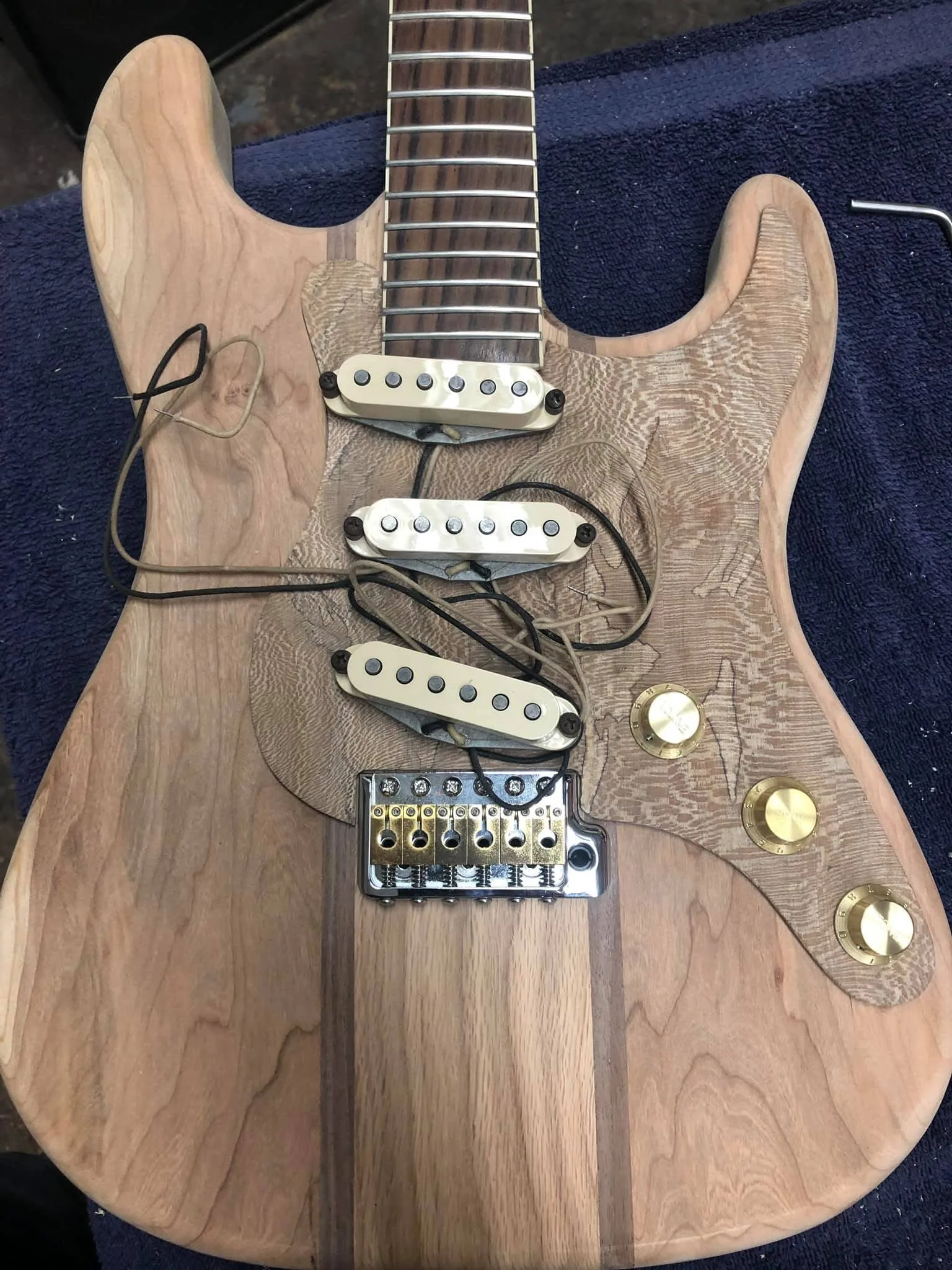
I was delighted to be given the opportunity to make my own guitars using locally supplied wood. I can't get that at Fender. I'm not famous enough for a signature model. But through the boutique shop I worked with in Maryland, I was granted exactly that — I could choose whatever pickup configuration I wanted, dial in my tone, and create something genuinely one of a kind. That is my signature sound. Fender's move feels like it could rob other players of that same feeling. Sure, you can build a Partscaster from official Fender parts, but where does that end? Will they also go after licensed builders like Warmoth?
Most of your students are adult beginners shopping for their first serious electric. What do you tell them right now when they see these headlines?
I tell them nothing is finalized. You can continue to shop other builders to your heart's content. But if you're considering a Fender Stratocaster, keep this situation in the back of your mind and watch how it develops. I'll say this — I'm a Fender guy and I'd proudly proclaim that. But I also play other guitars in my collection, from large builders and small ones alike. You don't see golf companies suing each other over the shape of an iron or a wood. Why should guitar companies be any different?
Where do you hope this ends up? If you could speak to Fender directly, what would you say?
I hope it ends where everyone wins. Fender sold an estimated 450,000 electric guitars in 2023 — roughly 180,000 to beginners alone. The entire boutique S-style market is a rounding error on that number. Are they really losing meaningful market share to small builders making exactly what a specific consumer wants? If the answer is to compete, then compete. Be more innovative with the model. I see that in guitars like the Fender Ultra II Meteora, which I recently purchased and absolutely love precisely because it's different. Fender nailed that guitar. That's the move. Innovate. Don't litigate.
Frequently Asked Questions
Is my S-style guitar at risk because of the Fender lawsuit?
If you already own an S-style guitar, no. Fender's enforcement campaign targets builders and sellers, not consumers. The cease-and-desist letters sent in May 2026 went to manufacturers and distributors. Owning an S-style guitar, from a boutique builder or a major brand, is not affected by Fender's current legal action (Guitar World, May 2026).
What did the German court actually rule in March 2026?
A court in Düsseldorf, Germany, recognized the Stratocaster body design as a protected work of applied art under German and EU copyright law. Fender's law firm Bird & Bird said the ruling gives Fender enforceable rights against guitars using the Stratocaster body shape that are manufactured, sold, or distributed into Germany and the wider EU (Bird & Bird, March 2026).
Which guitar builders received Fender cease-and-desist letters?
Guitar World confirmed that US boutique builder LsL Instruments received a cease-and-desist letter in May 2026. Reports indicated other US builders may have received similar letters. Fender said some recipients had already entered settlement discussions, with a response deadline reportedly extended to June 8, 2026 (Guitar World, May 17, 2026).
Does the Fender ruling affect S-style guitar purchases in the US?
The strongest legal enforcement is in the EU, particularly Germany, where the March 2026 ruling applies. The US situation is based on separate legal grounds and is still developing. As of late May 2026, Fender said its target is direct Strat copies, not all S-style shapes, and that designs different enough to avoid confusion fall outside its campaign (Guitar World, May 2026).
What does "sufficiently different" mean for S-style guitar builders?
Fender hasn't published a specific checklist. Based on its May 2026 public statements, guitars that avoid direct Stratocaster copying, with enough design changes to prevent consumer confusion, fall outside its stated target. Settlement talks with affected builders suggest the line is being drawn case by case rather than through a blanket rule on all S-style shapes (Guitar World, May 2026).
Sources
- Guitar World — "Fender speaks out on cease-and-desists," May 26, 2026, retrieved 2026-05-29
- Guitar World — "Fender cease-and-desist: LsL Instruments," May 17, 2026, retrieved 2026-05-29
- Guitar World — "Fender legal ruling to protect Stratocaster body design," March 2026, retrieved 2026-05-29
- Bird & Bird — Düsseldorf Stratocaster ruling announcement, March 2026, retrieved 2026-05-29
- Market Reports World — Guitar market report, Fender ~450,000 units globally in 2023, retrieved 2026-05-29
- ShelfTrend — Guitar market analysis, beginner/intermediate/pro segment estimates, 2025, retrieved 2026-05-29