
"Pick up that guitar. Don't wait." That's the honest answer Mark Claiborne gives to every 60-year-old who asks whether they can still learn. He's been teaching guitar and leading worship since 2010, working with adults at every age and every starting point. The students who call themselves too old almost always have a guitar somewhere in their home, waiting.
What he's seen consistently: the biggest obstacle to learning at 60 isn't the hands. It isn't the brain. It's the habit of waiting for the right time: retirement, the kids leaving, a slower season. That moment rarely arrives the way people picture it. And in the meantime, the guitar sits.
Key Takeaways
- 60 is not too old to learn guitar — AARP research shows music training improves verbal memory and attention after just 10 weeks.
- The most common barrier isn't age or arthritis. It's waiting for the right time that never quite arrives.
- Cowboy chords, simplified voicings, and lighter strings make guitar accessible even for players managing hand stiffness.
- Ten to fifteen focused minutes a day builds more real skill than occasional long sessions.
- Tomorrow isn't promised. Pick up the guitar today — music connects us in ways few things can.
| Common Concern at 60 | What the Research Actually Shows |
|---|---|
| I'll finally have time when I retire | Most retirees find schedules fill quickly — building the habit before retirement, while structure still exists, tends to produce better results |
| My brain can't learn new things at 60 | A 2024 BBC study of 1,100+ adults found instrument playing delivers the strongest brain-health benefit of any music activity studied |
| Arthritis will stop me from playing | Cowboy chords, lighter strings, lower action, and simplified two-finger voicings make guitar playable for most players with hand stiffness |
| My fingers won't move fast enough | Speed isn't the goal at the start — clean chord changes and basic rhythm are, both achievable within the first few months at any age |
| It'll take years before I can play a real song | With 10–15 focused minutes daily, most adult beginners play songs they enjoy within 3 to 6 months (Tomas Michaud, Guitar for Older Beginners) |
Is 60 Too Old to Learn Guitar?
In 2024, AARP summarized research showing adults improve verbal memory and attention skills after as little as 10 weeks of music training — and these results held for learners well into their 60s and 70s (AARP, "Brain Health Benefits of Learning a Musical Instrument"). A BBC-reported study that same year followed more than 1,100 adults over 40 and found instrument playing was linked with the strongest brain-health benefits of any music activity they tracked (BBC, 2024). The science isn't ambiguous: 60 isn't when learning stops.
The adult brain stays adaptable in ways that surprised researchers even 20 years ago. Adults at 60 learn differently than teenagers: more deliberately, with far more life experience to connect new material to — but they learn. The question isn't really whether you can. It's whether you'll start, and whether you'll be consistent enough once you do.
Compared to learning guitar at 50, the picture at 60 is nearly identical. The challenges shift slightly. Physical adjustments become slightly more relevant, time management gets trickier — but the fundamentals of adult guitar learning don't change by decade. See also: Is It Too Late to Learn Guitar After 40? for the full research picture on adult neuroplasticity and instrument learning at any age.
Why Do Most 60-Year-Olds Actually Struggle to Start?
In 2024, AARP found that 55% of Americans aged 45 and older are actively learning new things — and 97% of those current learners say they intend to continue (AARP, Lifelong Learning in Older Adults). The desire to keep growing is clearly there. What stops most people from picking up guitar isn't ability or even arthritis. It's a specific story they tell themselves about time — and it almost always involves retirement.
"The biggest issue is time," says Mark Claiborne. "I hear a lot of people say they'll finally learn guitar once they retire because they'll have more time — then find out they really don't. Some mention different ailments: hands, back. But there are ways around those. My message to every player is: don't wait. You can start to learn today. Find out what your limitations are. Find out if you really enjoy it. I don't recommend anyone get into anything they don't thoroughly enjoy, especially if they're investing money into it."
The retirement plan sounds reasonable. More free time should mean more practice time. But most retirees find their schedule fills up in ways they didn't predict: grandkids, health appointments, travel, social obligations. The structure that made a daily practice habit possible earlier in life is often what retirement removes. The people who start before they retire are usually the ones who actually build the habit. The ones who wait tend to still be waiting five years later. If you're still working and wondering how to fit practice into a packed week, how to find time to practice guitar with a full-time job covers the same 15-minute system — and it works just as well at 65 as it did at 35.
The best time to start learning guitar was 20 years ago. The second best time is right now — not after retirement, not next month. Now.
What Happens When You Actually Pick It Up?
Guitar teachers who work with older adults consistently find that students in their 60s often show more focus and consistency than younger learners. Adults at this age don't need to be convinced that patience matters — they've lived long enough to know it does. Structured, beginner-paced video lessons are the best starting point for older learners — the kind that build daily progress without overwhelming you with theory (Acoustic Guitar; MusicRadar). Mark's beginner video below is a good first step — nearly 30,000 people have watched it.
"Many surprise me and kind of kick themselves for waiting so long to get started," Claiborne says. "One guy in particular has been so excited to learn — he even joined his worship band. He picked up on it really quickly and is full of questions."
That student's enthusiasm produced a memorable moment in a recent lesson. Mark was showing him "Forever" by Chris Tomlin — played in the key of A. In the instrumental, Mark often uses open strings as walk-ups, playing the open D, G, and B strings while muting the high E, then hammering into the A chord. The student's response was immediate: "WHAT WAS THAT?"
"I chuckled," Claiborne says. "I explained: in the beginning, I don't have students worrying about what specific notes are in each chord shape — just the shapes themselves. But a G chord is three notes: G, B, and D. You don't always have to play them in that order. I'm playing the open D, G, and B strings to get the same chord effect. Just make sure all the strings ring at the same time." That one concept — that chord tones can live anywhere on the neck — opens up a whole new way of hearing the guitar. And it clicks for students at 60 just as fast as it does at 30.
That's the thing about learning guitar at this stage of life. The discoveries keep coming. Every student, at every level, has their "WHAT WAS THAT?" moment. For more on how the learning arc actually unfolds, see our complete guide to learning guitar as an adult and how long it really takes to learn guitar.
Does Arthritis or Hand Stiffness Stop You at 60?
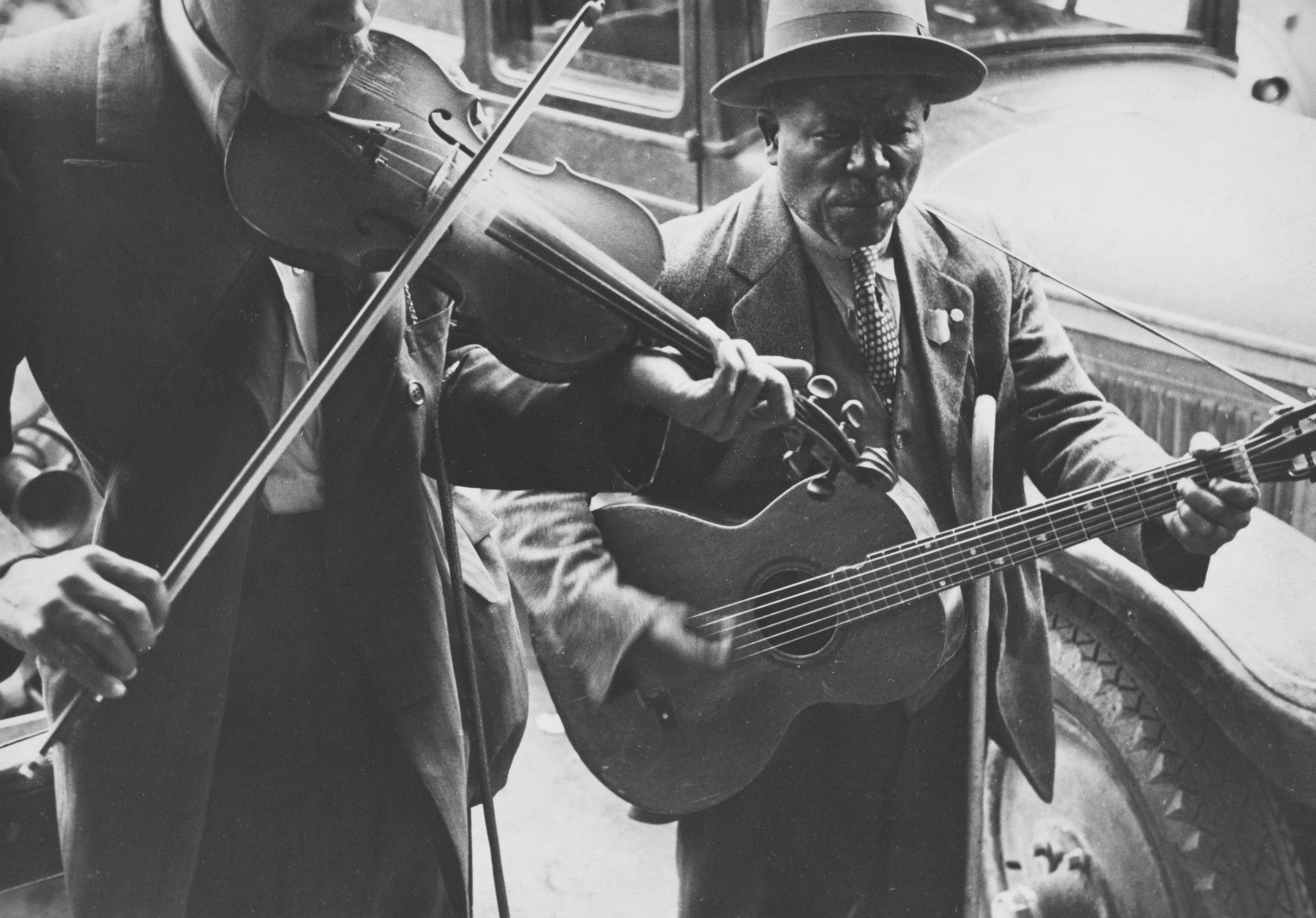
Rarely. Guitar setup and technique matter far more than the condition of a player's hands. Lower string action, lighter gauge strings, and a shorter scale length all reduce the fretting pressure needed to produce clean notes. A proper guitar setup — typically $40–60 at any music store — often solves what feels like a physical limitation (Premier Guitar; Eastwood Guitars).

"Open string chords — cowboy chords — are your friend for students with hand limitations," Claiborne says. "For them, I teach almost like I'm teaching piano: they need to know the notes in the chords. For a C chord, for example, you can just place your index finger on fret 1 of the B string and play just the top three strings — G, C, and the high E. It's effective."
There are also tools designed to build hand and finger strength gradually. Claiborne uses them himself. But he adds an important caution: "Like working out at the gym, you tend not to know your own strength after using them. The instrument works best when you relax and apply only the minimum pressure on the frets to get the strings to ring properly. That's actually a great exercise on its own — just finding the minimum pressure needed."
Recommended Hand Tools
- Hand strengthener (finger resistance trainer) — for building general grip endurance between sessions
- Individual finger trainer — for isolating each finger. Build up slowly — these work faster than people expect.
Tomas Michaud, who has guided thousands of adult beginners, recommends practice sessions of 10–15 minutes with breaks built in — not because of ability, but because the tendons and muscles in the hands need time to adapt to guitar's demands (Tomas Michaud). Short, consistent sessions are genuinely kinder to aging hands than occasional marathon practice days. Our free 30-day practice plan is built around exactly this structure.

What Should a 60-Year-Old Actually Do Today?
"For those who already have guitars sitting and collecting dust — pick it up now," Claiborne says. "Tomorrow isn't promised."
He comes back to a specific moment when explaining why this matters to him personally. He was binging Ozark on Netflix and landed on the series finale. In a flashback, the main character Ruth remembers her uncle , who died earlier in the series, sitting with an old guitar, quietly playing and singing "Angel From Montgomery." Other family members drift in and join him.
"That moment was golden," Claiborne says. "This character never really showed much expression in the show — but he did there. Music connects us. It's a great way to express ourselves. That's the magical moment I want for all of my students."
Note: This clip contains strong language. It's a raw, emotional moment — which is exactly what makes it stick.
That moment — someone playing something quiet and real, with people they love drifting over to join — is what guitar at 60 is actually about. Not technique scores. Not YouTube performance clips. Just the ability to pick something up that was always out of reach and make it yours.
Start with Mark's beginner lesson above — it covers the three chords most adult guitarists use in their first real songs. If you want a calmer, more methodical approach alongside it, Classical Guitar Corner's fundamentals course is built around quality over quantity. Either path, paired with our free 30-day plan, gives you a full first month of structure. Use our free guitar tools to explore chords and scales as you go.
Free Download
Get the 30-Day Guitar Practice Plan
Day-by-day sessions, the targeted practice formula, and a chord reference for your first month. Built around 15 minutes a day. Free.
Get the Free Plan →Frequently Asked Questions
Can I learn guitar at 60?
Yes. AARP research shows adults in their 60s and 70s improve verbal memory and attention after as little as 10 weeks of music training. Age is not the primary barrier. Consistency is. Commit to 10–15 focused minutes daily and you will make real, noticeable progress. See also: Can I Learn Guitar at 50?
What is the best guitar for a 60-year-old beginner?
Start with a quality acoustic guitar in your price range. Go to a music store and hold a few before buying — how it feels in your hands matters. Ask the tech to set it up with lower action and lighter strings. This reduces fretting pressure significantly. Find acoustic options at zZounds or used at Reverb.
How long does it take to learn guitar at 60?
With 10–15 focused minutes of daily practice, most adult beginners play songs they feel proud of within 3 to 6 months. The timeline at 60 is no different from 30 or 40 — what determines progress is consistency, not age. For the full breakdown, see How Long Does It Take to Learn Guitar as an Adult?
Can I play guitar if I have arthritis or hand stiffness?
Usually yes. Cowboy chords, simplified voicings — like playing just the top three strings for a C chord — and lighter strings reduce hand demands significantly. Lower string action ($40–60 setup) solves most of what feels like a hand problem. Short practice blocks with breaks are easier on the tendons than long sessions (Tomas Michaud).
Sources
- AARP — "Brain Health Benefits of Learning a Musical Instrument," retrieved 2026-06-04
- AARP — Lifelong Learning in Older Adults (55% actively learning, 97% intend to continue), retrieved 2026-06-04
- BBC — "Playing musical instrument linked to brain health benefits in adults over 40," 2024, retrieved 2026-06-04
- Tomas Michaud — "How to Play Guitar for Older Beginners," retrieved 2026-06-04
- Acoustic Guitar — "The Best Websites and Apps for Learning Guitar," retrieved 2026-06-04
- MusicRadar — "Best Online Guitar Lessons: Sites and Apps," retrieved 2026-06-04
- Classical Guitar Corner — "Fundamentals of the Classical Guitar," retrieved 2026-06-04
- Premier Guitar — "Acoustic Guitar for Arthritic Hands," retrieved 2026-06-04
- Eastwood Guitars — "A Tenor Guitar Solution for Guitarists with Arthritic Hands," retrieved 2026-06-04
- MTWL Media — "These 3 Chords Are All You Need to Sound Good on Guitar," retrieved 2026-06-04
- Personal teaching experience — Mark Claiborne, MTWL Media, 2026