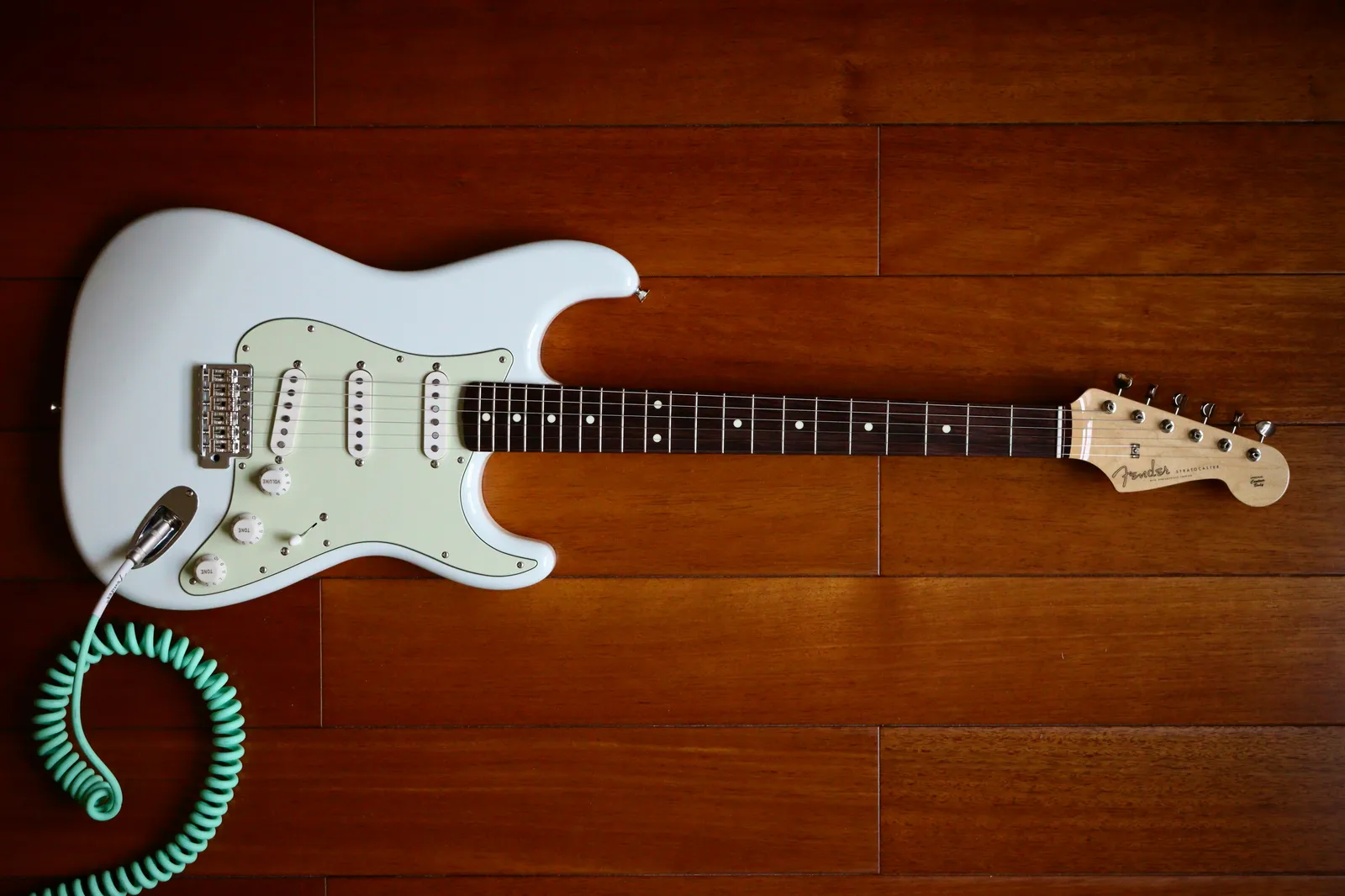
Until this week, the Fender Stratocaster lawsuit was Fender against individual boutique builders — a German court ruling, a cease-and-desist letter to LsL Instruments, a public clarification, a Reddit thread full of skeptical builders. As of June 22, 2026, it's something bigger. Thomann, the company behind the world's largest music retail operation, has filed legal action against Fender directly (Thomann, 2026).
This is the fourth post in our coverage of this story. If you're catching up, our original March coverage and May update cover the German ruling and the LsL Instruments letter, and our June 15 update covers Fender's "close copies" clarification and the builder community's reaction. This post covers what changed in the week since.
Key Takeaways
- Thomann, the world's largest music retailer, filed legal action against Fender on June 22, 2026 — defending its own Harley Benton brand and, it says, the wider guitar industry (Thomann, 2026).
- Thomann argues the Düsseldorf ruling Fender cites was decided in December 2025, three months before Bird & Bird's March 13, 2026 announcement made it public, and was an uncontested default judgment (Gear Gods, 2026; Conventus Law, 2026).
- Thomann's core argument: the Stratocaster's shape serves ergonomic functions — balance, fret access, comfort — not purely artistic ones, and is treated as public domain in the US (Thomann, 2026).
- Thomann names Tyler, Tom Anderson, Suhr, LSL, Maybach, Pensa, FGN, and PRS as builders the dispute could reach beyond Fender's direct rivals (Thomann, 2026).
- Fender CEO Edward "Bud" Cole told dealers in mid-June that "Fender is not suing anybody," targeting only "a handful of companies" — a framing Thomann's lawsuit now directly challenges in court (MusicRadar, 2026).
What Did Thomann Actually File Against Fender?
On June 22, 2026, Thomann announced it has taken legal action against Fender over the Stratocaster body-shape dispute (Thomann, 2026). Thomann owns Harley Benton, a budget S-style brand directly affected by Fender's cease-and-desist campaign — but the company says it isn't filing only for itself.
"We therefore see it as our responsibility to have this matter clarified in court not only for our own company, but for all parties involved," Hans Thomann said in the company's statement (Thomann, 2026). It's the first time a company this size has stepped directly into the fight, rather than just watching it happen to smaller builders.
The Düsseldorf Ruling Fender Cites Was Never Actually Tested
The ruling Fender has cited since March was actually decided in December 2025 — three months before Bird & Bird's March 13, 2026 press release made it public (Gear Gods, 2026; Conventus Law, 2026). That three-month gap between the actual decision and its public unveiling has gone almost entirely unremarked in coverage of this story until now.
It was a default judgment — the China-based AliExpress seller named in the case never appeared to contest it (Gear Gods, 2026). Thomann's filing makes that distinction explicit: "This judgment is based on missed deadlines, i.e. pure formalities, and does not, in our opinion, represent a comprehensive review of the legal claims" (Bedroom Producers Blog, 2026). That's the same gap we flagged from a smaller legal-commentary source in our June 15 update — now it's the centerpiece of a lawsuit from the industry's biggest retailer.

Is the Stratocaster's Shape Art, or Just Good Ergonomics?
Thomann's central legal argument is that the Stratocaster's body shape exists because of function, not artistic choice. The upper horn balances the guitar on a strap, the double cutaway gives access to the highest frets, and the body contours fit against the player's ribs and forearm — not artistic flourishes, in Thomann's framing, but solved engineering problems (Thomann, 2026).
"We used to be a small music store ourselves and know exactly where we have come from. Diversity, fairness and respectfully dealing with each other have always been part of our philosophy. Many of those affected do not have the financial and legal means to conduct such a legal dispute." — Hans Thomann, Thomann company statement, June 22, 2026
Thomann's filing also raises a jurisdictional wrinkle most coverage has skipped past: the company says the Stratocaster shape is treated as public domain in the United States, even as Fender pursues copyright protection for the same shape in Germany and the EU (Thomann, 2026). The same body outline, in other words, may carry different legal status depending on which side of the Atlantic a builder ships from.
Who Else Could This Lawsuit Affect?
Thomann names Tyler, Tom Anderson, Suhr, LSL, Maybach, Pensa, FGN, and PRS as builders the dispute could touch beyond Fender's direct rivals, alongside its own Harley Benton brand (Thomann, 2026). LsL Instruments — the recipient of the cease-and-desist letter we've followed since our May update — is on that list too, no longer just a case study but a named example in someone else's lawsuit.

PRS's Silver Sky comes up as a particularly interesting example — a guitar widely understood as an homage to the Stratocaster, sold by one of the industry's largest manufacturers, sitting in the same gray area Fender's cease-and-desist letters target when sent to a five-person shop (Bedroom Producers Blog, 2026).
Fender's Response: "We Are Not Suing Anybody"
Fender CEO Edward "Bud" Cole addressed the controversy at a dealer event earlier in June, before Thomann's lawsuit was filed. "First and foremost, Fender is not suing anybody," Cole said, adding that the company had "reached out thoughtfully and respectfully to a handful of companies whose guitars come extremely close to replicating the iconic Fender Stratocaster design" (MusicRadar, 2026).
- December 2025 Düsseldorf Regional Court issues a default judgment against a China-based AliExpress seller.
- March 13, 2026 Bird & Bird publicly announces the ruling on Fender's behalf.
- May 2026 Fender sends cease-and-desist letters, including to LsL Instruments.
- May 27, 2026 Fender clarifies it is targeting only "close copies," not every double-cutaway guitar.
- Mid-June 2026 CEO Edward "Bud" Cole tells dealers "Fender is not suing anybody."
- June 22, 2026 Thomann files suit against Fender, naming eight other builders potentially affected.
That timeline is the tension at the heart of this story: a company saying, in public, that it isn't suing anyone, while its cease-and-desist letters reportedly demanded production stops, inventory recalls, and sales-data disclosure from builders who can't afford to fight back (Bedroom Producers Blog, 2026). Thomann's lawsuit is the first time someone with the resources to actually contest that gap in court has done so.
What Happens Next in the Thomann v. Fender Case?
As of late June 2026, this is the opening move in a legal fight, not a resolved case (Gear Gods, 2026). The next developments to watch are Fender's formal response, any discovery process, and whether a court — for the first time in this entire saga — actually tests whether the Stratocaster shape can be protected the way Fender claims, instead of ruling on a case nobody showed up to fight.
For players, nothing changes today. If you're shopping for an S-style guitar in the US right now, see our breakdown of S-style guitars with genuinely distinct design choices — this dispute is between manufacturers, retailers, and Fender's legal team, not buyers.
Free Guitar Resources
Getting started with electric guitar? We've got you covered.
Chord charts, scale guides, a 4-week practice plan, and more — free for MTWL readers.
Download Free Resources →My Take — A Conversation with Mark Claiborne
Thomann framed this lawsuit as defending the whole guitar industry — not just their own Harley Benton brand. As someone who teaches players actively shopping for S-style guitars, did that framing resonate with you, or does it read more like a business move dressed up as advocacy?
It resonated with me — but at the end of the day, businesses make moves to protect themselves. What I will say is that it's kind of classless for Fender to be making this move as if the Strat body style hasn't been fair to copy for over 70 years. Good for Thomann for standing up to the musical giant.
From what I understand, Thomann is one of Fender's biggest partners overseas — but they also carry all types of S-style guitars. Fender's move could potentially restrict Thomann to selling only Fender-approved S-style designs. What happens when supply shortages hit? I've personally seen them recently with guitars I've been interested in buying. Instead of being an independent retailer with full inventory freedom, Thomann would essentially be handcuffed to Fender.
You mentioned supply shortages — situations where guitars you wanted simply weren't available. If Thomann ends up restricted to Fender-approved S-style guitars, what does that actually look like for a player trying to find something?
From a worldwide view, it would make things extremely difficult. Countries in Europe don't have the used market the US has. There are always people here looking to sell or trade on sites like Reverb — but shipping overseas is expensive, so that pipeline has real limits. I've found some real gems in the used market myself. Most recently, a Fender American Ultra II Meteora — fantastic guitar — for a fraction of retail. That kind of find gets a lot harder if you're cut off from the US used market.
Fender's CEO said on record in June: "First and foremost, Fender is not suing anybody." That came out right before Thomann filed. When you hear a company say that while simultaneously sending cease-and-desist letters demanding builders stop production and disclose sales data — what does that read as to you?
It means saying one thing and doing another. I get it from all sides — but I think in 2026 these big corporations are more focused on the bottom line than on the consumer, and the consumer suffers for it. Fender guitars aren't getting any cheaper, and that doesn't necessarily mean the quality is the same or getting better. I give this caveat to players about American-made items in general, not just instruments: at some point, you're paying someone's salary, not for quality. Where is that line drawn?
I've been fortunate enough to learn how to craft my own guitars, and that reality becomes more apparent every time I price out a build. These days I'd rather purchase parts and put in the hours myself than spend two thousand dollars on a new guitar that everyone is excited about for a month and then forgets. The tools available now — for building, for recording, for everything — mean we all have access to the same resources. That levels things considerably.
For the student who isn't there yet with building skills — say they have $500–$800 and they want an S-style guitar in 2026. What do you point them at?
Honestly, I'd tell them to consider the used market first. Reverb is a great place to browse and find lightly used or demo versions of expensive guitars for significantly less than retail. At that price point, the used market gets you into instruments you couldn't touch new — and the quality ceiling is much higher than what $800 buys you brand new right now.
Frequently Asked Questions
What did Thomann actually file against Fender?
On June 22, 2026, Thomann — the German company behind the world's largest music retail operation — announced it has taken legal action against Fender over the Stratocaster body-shape dispute. Thomann says it is defending its own Harley Benton brand and, in its words, acting on behalf of the wider guitar industry (Thomann, 2026).
Was the Düsseldorf ruling Fender cites a final, tested decision?
No. The underlying court decision was issued in December 2025, three months before Bird & Bird's March 13, 2026 press release made it public, and it was a default judgment against a China-based AliExpress seller who never appeared to contest the case (Gear Gods, 2026; Conventus Law, 2026).
What is Thomann's legal argument about the Stratocaster shape?
Thomann argues the Stratocaster's body shape serves functional, ergonomic purposes — the upper horn for balance, the cutaways for fret access, the body contours for comfort — rather than existing as a purely artistic work, and says the design is treated as public domain in the United States (Thomann, 2026).
Which other guitar builders could be affected by this lawsuit?
Thomann names Tyler, Tom Anderson, Suhr, LSL, Maybach, Pensa, FGN, and PRS as builders the dispute could reach beyond Fender's direct rivals, in addition to Thomann's own Harley Benton brand (Thomann, 2026).
Does this lawsuit change anything for someone buying a guitar right now?
Not yet. As of late June 2026, this is the opening move in a legal fight, not a resolved case. Nothing about buying or owning an S-style guitar changes today; the dispute is between manufacturers, retailers, and Fender's legal team (Gear Gods, 2026).
Sources
- Thomann — "Thomann takes legal action against Fender," June 22, 2026, retrieved 2026-06-24
- Guitar World — "Thomann is suing Fender," June 22, 2026, retrieved 2026-06-24
- MusicRadar — "Thomann vs Fender: world's biggest music retailer pushes back," June 22, 2026, retrieved 2026-06-24
- Bedroom Producers Blog — "Thomann Is Taking Fender's Stratocaster Fight to Court," June 23, 2026, retrieved 2026-06-24
- Gear Gods — "Music Retailer Thomann Sues Fender Over Stratocaster Legal Actions," June 2026, retrieved 2026-06-24
- MusicRadar — "CEO Edward 'Bud' Cole pushes back on the cease-and-desist controversy," retrieved 2026-06-24
- Conventus Law — Bird & Bird press release, "Landmark Ruling For Fender Protecting Iconic Stratocaster Design," March 13, 2026, retrieved 2026-06-24