
Guitar for seniors is one of those topics people search in quiet moments — usually sitting next to an instrument that's been collecting dust for years. Bought with good intentions, put down after a few frustrating weeks, with a standing promise to return when things slowed down. That moment never came. For a lot of older adults, that guitar represents something bigger: a lifelong itch they never scratched, a hobby they told themselves was behind them now.
It isn't. Mark Claiborne has been teaching guitar and leading worship since 2010, working with adult beginners at every age. He's watched students in their 60s, 70s, and beyond learn to play songs they love and wonder why they waited so long. The answer almost always isn't biology. It's a story they told themselves — that the window was closed. This is the honest guide to what actually changes after 60, and what doesn't.
Key Takeaways
- AARP research shows adults improve memory and attention after as little as 10 weeks of music training — and these results hold into the 60s and 70s.
- The biggest barrier for seniors isn't arthritis or slow fingers. It's the story that it's too late. It isn't.
- A proper guitar setup — lower action, lighter strings — solves most physical discomfort for around $40 to $60.
- Ten minutes of daily practice beats a two-hour session on the weekend. Short, regular, and consistent wins every time.
- Start with five chords: G, C, D, A, and E. They unlock more songs than most players will ever need.
| What Seniors Worry About | What Actually Happens |
|---|---|
| My brain can't learn new things anymore | AARP research shows adults in their 60s and 70s improve verbal memory and attention after just 10 weeks of music training — the brain stays adaptable |
| Arthritis makes guitar impossible | Simplified voicings, lighter strings, lower action, and 10-minute sessions with breaks make guitar accessible for most players managing hand stiffness |
| My fingers are too slow and stiff | Speed isn't the goal at the start — clean chord changes are, and those come within weeks at any age with consistent short practice |
| I don't have time to practice seriously | Ten minutes a day is enough to build real progress — structured short sessions outperform occasional long ones for motor skill development |
| I should have started decades ago | The best time to start was 30 years ago. The second best time is today — students in their 70s regularly surprise themselves within the first few months |
Can Seniors Actually Learn Guitar?
In 2024, AARP summarized research showing that adults improve verbal memory and attention skills after as little as 10 weeks of music training — and these results held for learners well into their 60s and 70s (AARP, "Brain Health Benefits of Learning a Musical Instrument"). A BBC-reported study that same year followed more than 1,100 adults over 40 and found that instrument playing produced the strongest brain-health benefits of any music activity they measured (BBC, 2024). The science here isn't complicated: the brain doesn't stop forming new connections after 60. It just takes a little longer to build the pathways — which means patience matters more than pace.
Searches for "guitar for seniors" grew by 900% year over year between mid-2025 and mid-2026 (Google Keyword Planner, 2026). That's not a fluke. It reflects something real: a generation of people who grew up in the era of Hendrix, the Beatles, and early country radio who never stopped wanting to play. The desire never went away. What went away was the belief that it was still possible. It is.
Adult learners at 60 and beyond have one genuine advantage over younger players: patience. They've spent decades knowing that worthwhile things take time. They're less likely to quit the moment the first chord doesn't sound clean. That patience — combined with a good setup and a realistic starting point — is why older students often progress more steadily than teenagers. For the full picture on the adult brain and instrument learning at any age, see Is It Too Late to Learn Guitar After 40? and Can I Learn Guitar at 60?
What Actually Changes When You Start Guitar After 60?
According to the CDC, approximately 58 million American adults have been diagnosed with arthritis, with rates increasing substantially after age 60 (CDC, National Arthritis Statistics). That's the most common concern seniors raise before picking up a guitar — and it's real, not an excuse. But a few other things change too, and being honest about all of them makes the path forward clearer.
A few things do change, and it's worth being honest about them. Motor skill acquisition slows slightly with age — new finger movements take a little longer to groove into muscle memory. Tendons and joints are less forgiving of prolonged strain, which means long practice sessions with no breaks genuinely do cause more soreness for older players. Vision changes can make small chord diagrams harder to read. None of this stops anyone from learning. But ignoring it leads to frustration that short-circuits progress early.
"I tell every older student the same thing: don't try to play through pain or stiffness," says Mark Claiborne. "That's your body sending a signal. Take a break, stretch your hands, come back in ten minutes. You're not falling behind — you're practicing smart. The students who push through discomfort are the ones who end up putting the guitar down for weeks. The ones who respect the signal keep showing up daily."
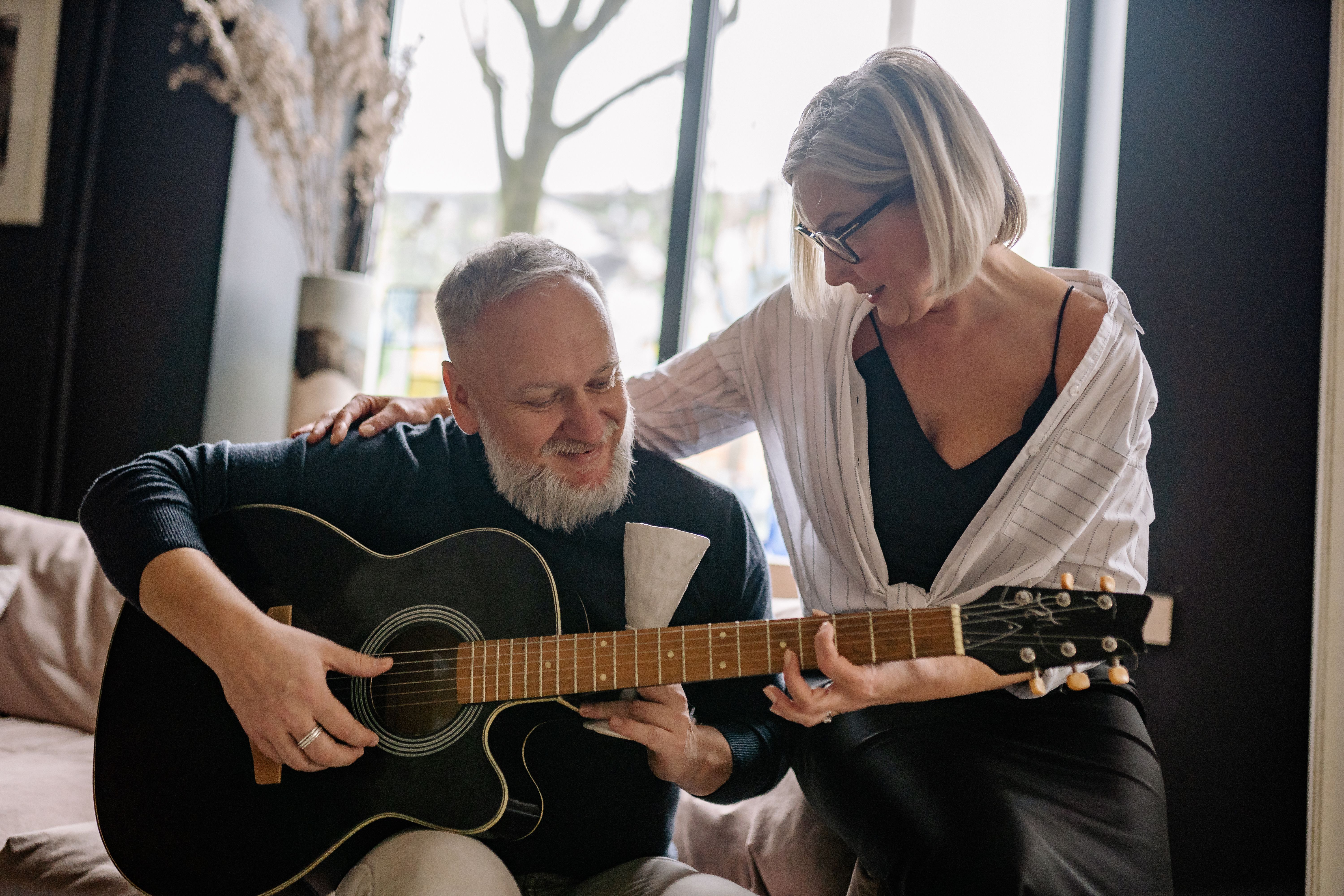
Arthritis and hand stiffness get the most airtime, but they stop fewer players than people expect. The key is setup. A guitar that hasn't been professionally adjusted requires significantly more fretting pressure than one with properly lowered action. Most players who feel like their hands aren't capable of guitar have never tried a well-set-up instrument. That $40 to $60 setup visit to a local guitar tech is often the most impactful first purchase a senior player can make — more than a new guitar, more than lessons. For a deeper look at how older players navigate hand limitations, see how to switch guitar chords faster — the technique advice there applies just as much to seniors as to any other adult beginner.
Does Guitar Setup Really Make a Difference for Seniors?
Yes — more than almost anything else. Tomas Michaud, who has guided thousands of adult beginners through their first months, consistently cites guitar setup as the single most impactful first step for older players — before lessons, before practice routines, before anything else (Tomas Michaud, "How to Play Guitar for Older Beginners"). Most guitars ship from the factory with string action set high for durability, requiring significantly more finger pressure than a properly adjusted instrument. That gap is felt far more at 65 than at 25.
Guitar for seniors isn't about finding an "easy" guitar — it's about finding the right one and getting it prepared correctly. A nylon-string classical guitar has lower string tension than a steel-string acoustic, which means less fretting pressure and a gentler feel on older fingertips. A smaller-bodied acoustic (parlor or 000 size) sits better in the lap and requires less arm reach to play comfortably. Both are legitimate starting points. The wrong answer is a full-dreadnought acoustic with high action bought off the internet without being played first.
Where to Find Starter Guitars for Seniors
- Acoustic guitars at zZounds — filter by body size; parlor and concert bodies are easiest for seniors
- Classical / nylon-string guitars at zZounds — lower tension, easier on the fingertips
- Used acoustic guitars on Reverb — lightly used instruments at a fraction of new price; an excellent option for seniors testing whether guitar sticks before investing heavily
Regardless of which guitar you choose, have it set up. Ask for lighter gauge strings (0.011 or 0.012 for acoustic, 0.009 for electric if you go that route) and ask the tech to lower the action as much as the instrument allows without buzzing. These two changes together reduce the physical demand of playing by a meaningful margin. They don't make the guitar easier to learn — they make learning possible for hands that would otherwise quit before they ever got started.

How Seniors Should Practice Differently
The 10,000-hour framework doesn't apply here. Neither does the "practice until your fingers bleed" guitar mythology. Tomas Michaud, who has guided thousands of adult beginners through their first months of guitar, recommends sessions of 10 to 15 minutes with breaks built in — not because older players are less capable, but because the hands and tendons genuinely need time to adapt (Tomas Michaud, "How to Play Guitar for Older Beginners"). Short daily sessions produce better motor skill retention than long occasional ones at any age. For seniors, the gap is even wider.
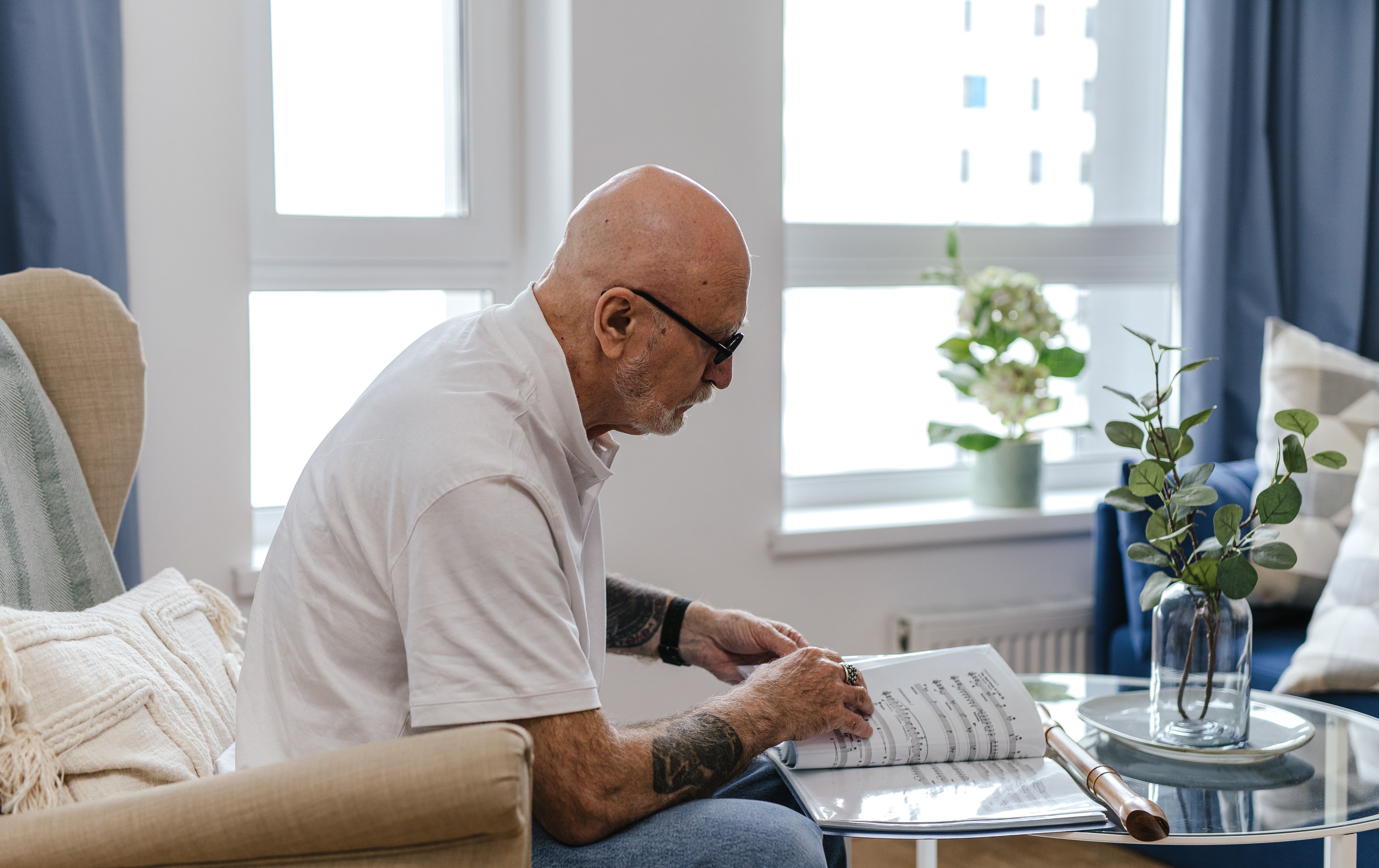
A simple daily structure that works for older beginners: start with two minutes of gentle hand and wrist stretches before touching the guitar. Then spend five minutes on one or two chord shapes — just fretting them cleanly, not strumming yet. Spend five minutes switching between two chords slowly, aiming for clean sound rather than speed. End with a minute of playing a simple song or strumming pattern you already know. Stop before your hand feels fatigued or tense. That 12-to-15-minute routine, done consistently, builds more skill in a month than a two-hour Saturday session.
Accuracy before speed is the most important mindset shift for seniors. Slower, deliberate repetition builds the neural pathways that make chord changes automatic — and it's far kinder to older hands than the forcing-through-it approach. Start with G, C, D, A, and E — five open chords that unlock more songs than most players will ever need. See 5 songs with 3 chords for a concrete starting list. Once those five shapes feel natural, everything else comes from combining and expanding them.
Ten minutes every day beats two hours on Saturday. Not because of motivation — because that's genuinely how motor skill learning works.
What Happens When Seniors Actually Pick It Up?
The students who surprise Mark most consistently are the ones who arrive apologizing for their age. They walk in convinced they're a special case — that something about them specifically makes this harder. What happens next is usually the opposite of what they predicted.
"Many surprise me and kick themselves for waiting so long," Claiborne says. "One guy in particular — he came in skeptical, hands a little stiff, hadn't played a note in his life. Within a few months he was joining his worship band. He picked up on it fast and stayed full of questions. That curiosity is what I look for in any student. Older adults often have it in spades because they've been waiting to do this for decades."
The worship music angle comes up constantly with seniors. A lot of people in their 60s and 70s have spent years in church, singing songs they love, watching someone else play guitar, wondering what it would feel like to play along. That's a powerful motivator — more concrete than "I want to learn guitar," which is easy to walk away from. "I want to play these three songs at our Wednesday night service" keeps people showing up. For a broader look at how the adult learning arc unfolds, see the complete guide to learning guitar as an adult and how long it takes to learn guitar as an adult — both apply directly to senior beginners.
That video above is the best place to start for any senior beginner. Three chords, shown clearly, with no prior knowledge assumed. Pair it with our free practice plan and you have a full first month mapped out — no guessing, no overwhelm. Use our free guitar tools to explore chord shapes as you go.
Free Download
Get the 30-Day Guitar Practice Plan
Day-by-day sessions built around 15 minutes a day. The exact routine that works for adult beginners at 40, 60, and 70. Free.
Get the Free Plan →Frequently Asked Questions
Can seniors learn to play guitar?
Yes. AARP research shows adults improve memory and attention after as little as 10 weeks of music training, and these results hold into the 60s and 70s. The brain stays adaptable throughout life. The biggest barrier isn't biology — it's starting. See also: Can I Learn Guitar at 60? and Can I Learn Guitar at 50?
What is the best guitar for seniors?
A nylon-string classical guitar is easiest on the fingers — lower tension means less fretting pressure. A smaller-bodied acoustic (parlor or 000 size) reduces reach and sits lighter in the lap. Whatever you choose, get it professionally set up with lower action and lighter strings. Browse options at zZounds or find used instruments at Reverb.
How long does it take a senior to learn guitar?
With 10 to 15 focused minutes of daily practice, most seniors play songs they feel good about within 3 to 6 months. The timeline isn't meaningfully different from younger adult learners. Consistency matters far more than age. For a detailed breakdown, see how long it takes to learn guitar as an adult.
Can seniors with arthritis play guitar?
Usually yes. Simplified chord voicings — playing just the top three strings for a C chord, for example — reduce hand demands significantly. A proper guitar setup (lighter strings, lower action) solves most of what feels like a physical barrier. Short sessions of 10 to 15 minutes with breaks are genuinely kinder to arthritic hands than longer sessions (Tomas Michaud).
Sources
- AARP — "Brain Health Benefits of Learning a Musical Instrument," retrieved 2026-07-29
- BBC — "Playing musical instrument linked to brain health benefits in adults over 40," 2024, retrieved 2026-07-29
- Tomas Michaud — "How to Play Guitar for Older Beginners," retrieved 2026-07-29
- Classical Guitar Corner — "Learning Guitar at an Older Age," retrieved 2026-07-29
- CDC — National Arthritis Statistics (58 million adults diagnosed), retrieved 2026-07-29
- Google Keyword Planner — "guitar for seniors" search trend data, Jul 2025–Jun 2026 export, retrieved 2026-07-29
- Personal teaching experience — Mark Claiborne, MTWL Media, 2026